

Table of Contents
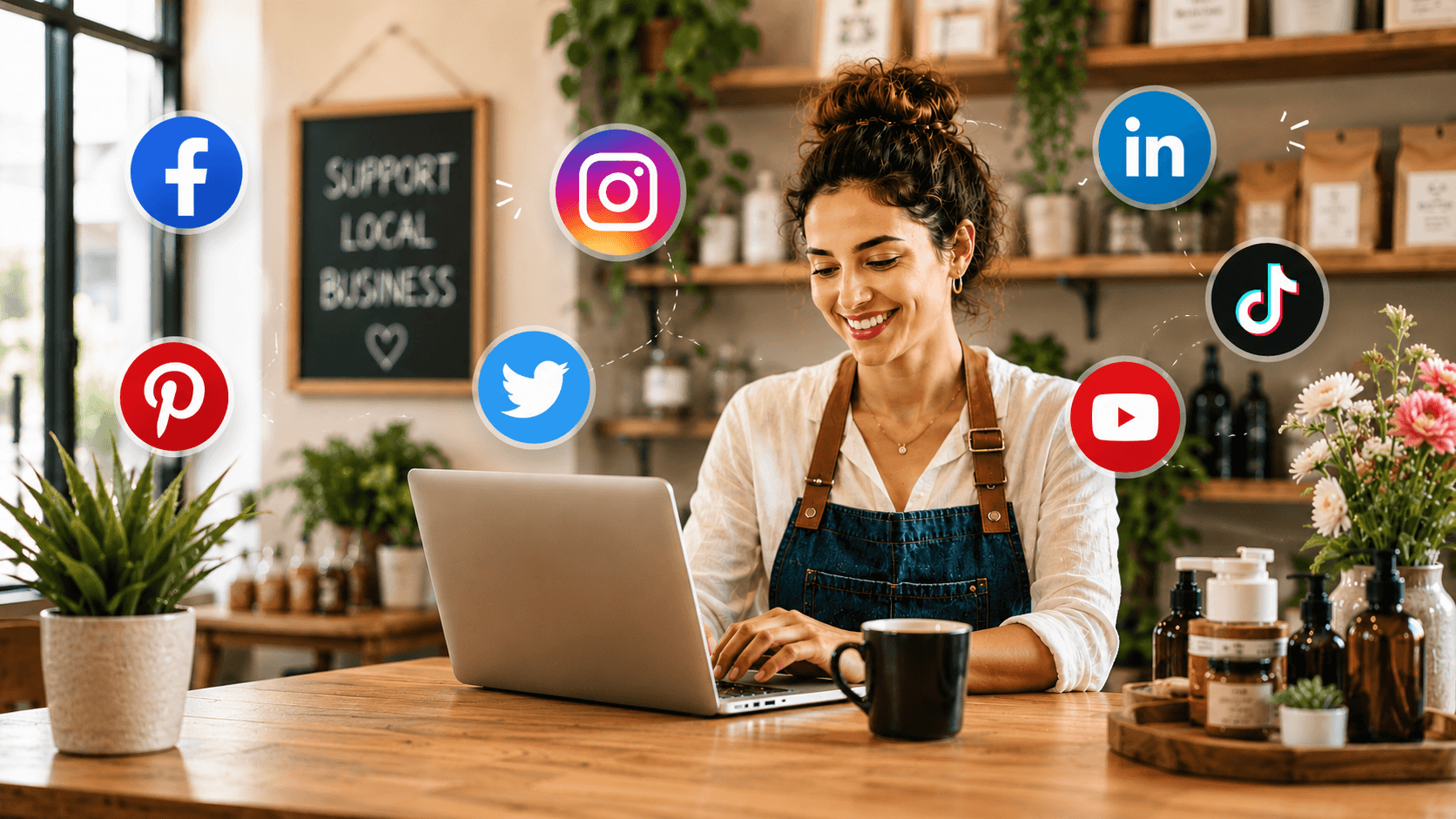
Choose the Right Social Media Platforms
Create a Consistent Brand Identity
Post Valuable Content, Not Just Promotions
Use Local SEO and Location-Based Content
Focus on Short-Form Video Content
Engage With Your Audience Every Day
Encourage User-Generated Content
Use Social Media Advertising Strategically
Track Your Social Media Performance
Develop a Simple Content Calendar
1. Choose the Right Social Media Platforms
One of the biggest mistakes small businesses make is trying to be active everywhere. Not every platform is suitable for every business.
Facebook works well for local businesses and community engagement.
Instagram is ideal for visual products and Brand Visual Design storytelling.
LinkedIn is effective for B2B marketing and professional services.
Focus on the platforms where your target customers spend their time.
2. Create a Consistent Brand Identity
Customers should recognize your business instantly across all social media channels.
Use:
The same Logo Design and profile image
Consistent brand colors
A clear brand voice
Similar messaging across platforms
A strong brand identity builds trust and makes your business more memorable.
3. Post Valuable Content, Not Just Promotions
Many businesses only post when they want to sell something. This often leads to low engagement.
Instead, create content that helps your audience:
How-to guides
Industry tips
Behind-the-scenes updates
Customer success stories
Frequently asked questions
Helpful content encourages people to follow your page and share your posts.
4. Use Local SEO and Location-Based Content
For local businesses, combining social media marketing with local SEO can increase visibility significantly.
Try:
Adding your location to posts
Using local hashtags
Sharing community events
Highlighting local customers and partnerships
When people search for businesses in their area, these signals can improve discoverability.

5. Focus on Short-Form Video Content
Reels/Shorts Videos continue to generate some of the highest engagement rates on social media.
Examples include:
Product demonstrations
Quick tips
Customer testimonials
Day-in-the-life videos
Before-and-after transformations
You do not need expensive equipment. A smartphone and good lighting are often enough. Businesses can also boost engagement with Creative Videos, Mini Brand Ads, and AI Videos.
6. Engage With Your Audience Every Day
Social media is not a one-way advertising channel.
Make time to:
Reply to comments
Answer messages
Thank customers for reviews
Participate in conversations
Businesses that actively engage with followers often build stronger customer relationships and increase loyalty.
7. Encourage User-Generated Content
User-generated content is one of the most effective forms of social proof.
Ask customers to:
Share photos of your products
Tag your business
Leave reviews
Post testimonials
Potential customers trust real experiences more than traditional advertisements.
8. Use Social Media Advertising Strategically
Organic reach can be limited, especially for newer businesses.
A small Paid Ads (Google/Meta) budget can help:
Increase brand awareness
Drive website traffic
Generate leads
Promote special offers
Even a modest investment can produce measurable results when campaigns target the right audience.
9. Track Your Social Media Performance
Successful social media marketing depends on data, not guesswork.
Monitor key metrics such as:
Engagement rate
Reach
Website clicks
Follower growth
Conversion rate
Regular analysis helps identify what content performs best and where improvements are needed.
10. Develop a Simple Content Calendar
Consistency is often more important than posting frequently.
A content calendar helps you:
Plan posts in advance
Maintain a regular posting schedule
Balance promotional and educational content
Save time throughout the month
Businesses that post consistently tend to see better long-term results than those that post randomly.
Social media marketing for small businesses does not require a huge budget. By choosing the right platforms, creating valuable content, engaging with your audience, and tracking results, you can build a stronger online presence and attract more customers over time.
The most successful businesses focus on consistency, authenticity, and providing value. Start with a few strategies, measure the results, and continue improving as you learn what works best for your audience.